
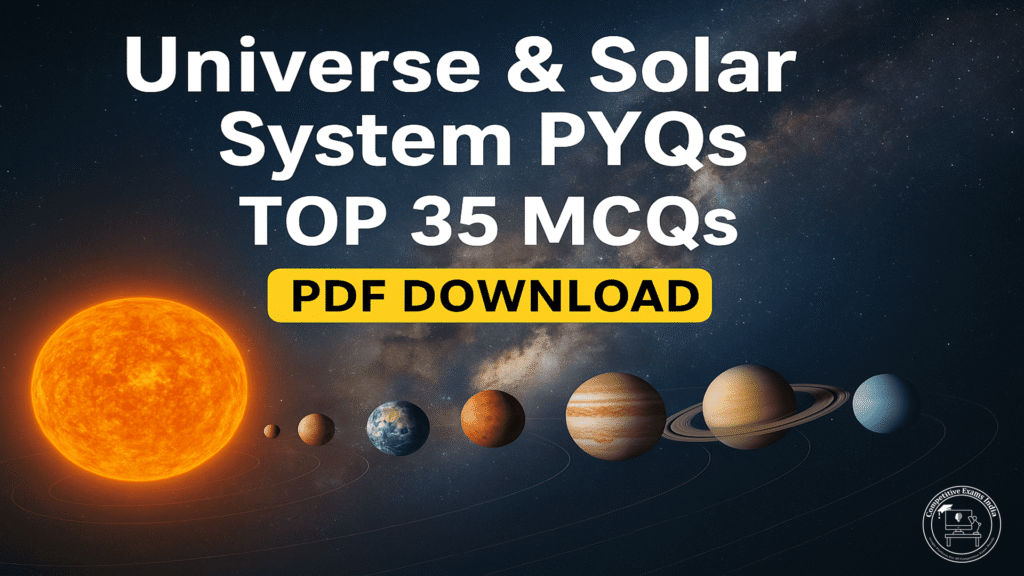
The Universe is the sum of all space, time, matter and energy — worlds, stars, globes, dust, and cosmic marvels.
Our Solar System is a bitsy part of this vast macrocosm one star( the Sun) and all objects bound to it — eight globes, their moons, asteroids, comets, and other elysian bodies.
Studying the Universe helps us grasp the grand scale of actuality, cosmic origins( like the big- bang), and our place in the macrocosm. On the other hand, knowing about the Solar System is pivotal to understand Earth’s terrain, seasons, climate and the conditions that make life possible. Together, Universe- and Solar System- scale knowledge enrich world- terrain literacy and consolidate our mindfulness of Earth’s fragility and oneness.
For test medication( terrain, general knowledge or competitive examinations), motifs on Universe and Solar System appear regularly. numerous PYQs ask for delineations, earth names, composition and structure — so they’re important to master.
Universe and Solar system PYQs
Q. The ‘Big Bang Theory’ is related to
(‘బిగ్ బ్యాంగ్ సిద్ధాంతం’ దేనికి సంబంధించినది.)[RAS/RTS (Pre) 2007)
(a) continental drifts (ఖండాంతర ప్రవాహాలు)
(b) origin of the universe (విశ్వం యొక్క మూలం)
(c) origin of the himalayas (హిమాలయాల మూలం)
(d) eruption of volcanoes (అగ్నిపర్వతాల విస్ఫోటనం)
Q.Which of one hypothesis/theory explains the origin of the universe?
(విశ్వం యొక్క మూలాన్ని వివరించే పరికల్పన/సిద్ధాంతాలు ఏవి?) [NDA 2019]
(a) Nebular Hypothesis (నెబ్యులర్ పరికల్పన)
(b) Binary Theory (బైనరీ సిద్ధాంతం)
(c) Big Bang Theory (బిగ్ బ్యాంగ్ సిద్ధాంతం)
(d) Planetesimal Hypothesis (ప్లానెటిసిమల్ పరికల్పన)
Q.The terms ‘Event Horizon’, ‘Singularity’, ‘String Theory’ and ‘Standard Model’ are sometimes seen in the news in the context of
(‘ఈవెంట్ హారిజన్’, ‘సింగులారిటీ’, ‘స్ట్రింగ్ థియరీ’ మరియు ‘స్టాండర్డ్ మోడల్’ అనే పదాలు కొన్నిసార్లు వార్తలలో ఈ క్రింది ఏ సందర్భాలలో కనిపిస్తాయి.) [IAS (Pre) 2017]
(a) observation and understanding of the universe.
(విశ్వాన్ని పరిశీలించడం మరియు అర్థం చేసుకోవడం.)
(b) study of the solar and the lunar eclipses.
(సూర్య మరియు చంద్ర గ్రహణాల అధ్యయనం.)
(c) placing satellites in the orbit of the Earth.
(భూమి కక్ష్యలో ఉపగ్రహాలను ఉంచడం.)
(d) origin and evolution of living organisms on the Earth.
(భూమిపై జీవుల మూలం మరియు పరిణామం.)
Q.The Milky Way is classified as
(పాలపుంతను ఎలా వర్గీకరించారు?)[UPPSC (Pre) 2001, (ACC 125 CGAT,Aug 2021)]
(a) Spiral Galaxy (స్పైరల్ గెలాక్సీ)
(b) Elliptical Galaxy (ఎలిప్టికల్ గెలాక్సీ)
(c) Irregular Galaxy (ఇర్రెగ్యులర్ గెలాక్సీ)
(d) Round Galaxy (రౌండ్ గెలాక్సీ)
Q.The mean distance from the Sun to the Earth is known as
(సూర్యుడి నుండి భూమికి సగటు దూరాన్ని ఎలా పిలుస్తారు.) [CDS 2008]
(a) light year (కాంతి సంవత్సరం)
(b) parallactic second (పారలాక్టిక్ సెకండ్)
(c) astronomical unit (ఖగోళ యూనిట్)
(d) Angstrom (ఆంగ్స్ట్రోమ్)
Ancient Indian History PYQs Quiz
Q.Light from the Sun reaches us in nearly
(సూర్యుని నుండి వచ్చే కాంతి దాదాపుగా _____ ) [WBCS 2020]
(a) 2 minutes (2 నిమిషాలు)
(b) 8 minutes (8 నిమిషాలు)
(c) 4 minutes (4 నిమిషాలు)
(d) 16 minutes (16 నిమిషాలు)
Q. Solar energy is due to
(సౌరశక్తికి కారణం ఏమిటి?) [UPPSC (Pre) 2006]
(a) ionisation (అయనీకరణం)
(b) nuclear fusion (అణు సంలీనం)
(c) nuclear fission (అణు విచ్ఛిత్తి)
(d) oxidation (ఆక్సీకరణం)
Q.Size of the Sun is how many times bigger than that of the Earth?
(సూర్యుని పరిమాణం భూమి కంటే ఎన్ని రెట్లు పెద్దది?) (MPPSC (Pre) 2014)
(a) 124 times (124 సార్లు)
(b) 100 times (100 సార్లు)
(c) 109 times (109 సార్లు)
(d) 115 times (115 సార్లు)
Q.Which one among the following stars is nearest to the Earth?
(కింది నక్షత్రాలలో భూమికి దగ్గరగా ఉన్న నక్షత్రం ఏది? ) [CDS 2019]
(a) Sirius (సిరియస్)
(b) Arcturus (ఆర్క్టురస్)
(c) Spica (స్పైకా)
(d) Proxima Centauri (ప్రాక్సిమా సెంటారీ)
Q.What is a constellation?
(నక్షత్ర సముదాయం అంటే ఏమిటి?) [CDS 2019]
(a) A particular pattern of equidistant stars from the Earth in the sky.
(ఆకాశంలో భూమి నుండి సమాన దూరంలో ఉన్న నక్షత్రాల యొక్క ఒక నిర్దిష్ట నమూనా. )
(b) A particular pattern of stars that may not be equidistant from the Earth in the sky.
(ఆకాశంలో భూమి నుండి సమాన దూరంలో ఉండకపోవచ్చు నక్షత్రాల యొక్క ఒక నిర్దిష్ట నమూనా.)
(c) A particular pattern of planets of our solar system in the sky.
(ఆకాశంలో మన సౌర వ్యవస్థ యొక్క గ్రహాల యొక్క ఒక నిర్దిష్ట నమూనా.)
(d) A particular pattern of stars, planets and satellites in the sky due to their position in the space.
(అంతరిక్షంలో వాటి స్థానం కారణంగా ఆకాశంలో నక్షత్రాలు, గ్రహాలు మరియు ఉపగ్రహాల యొక్క ఒక నిర్దిష్ట నమూనా.)
Q.We observe twinkling of stars due to
(మనం నక్షత్రాలు మెరుస్తుండటం గమనించడానికి కారణం ఏమిటి ?) [CDS 2011]
(a) frequent and periodic fluctuation of temperature of the surface.
(ఉపరితల ఉష్ణోగ్రతలో తరచుగా మరియు ఆవర్తన హెచ్చుతగ్గులు.)
(b) constant change of refractive index of the medium between the stars and the Earth because of temperature variation.
(ఉష్ణోగ్రత వైవిధ్యం కారణంగా నక్షత్రాలు మరియు భూమి మధ్య మాధ్యమం యొక్క వక్రీభవన సూచికలో స్థిరమైన మార్పు.)
(c) great distance of stars from the Earth.
(భూమి నుండి నక్షత్రాల మధ్య చాలా దూరం.)
(d) rise and fall of gaseous ball fire inside the stars.
(నక్షత్రాల లోపల వాయు బంతి అగ్ని పెరుగుదల మరియు పతనం.)
Universe and Solar System PYQs PDF
Q.A person stood alone in a desert on a dark night and wanted to reach his village which was situated 5 km East of the point where he was standing. He had no instrument to find the direction but he located the pole star. The most convenient way now to reach his village is to walk in the
(ఒక వ్యక్తి చీకటి రాత్రి ఎడారిలో ఒంటరిగా నిలబడి, తాను నిలబడి ఉన్న ప్రదేశానికి 5 కి.మీ తూర్పున ఉన్న తన గ్రామానికి చేరుకోవాలనుకున్నాడు. దిశను కనుగొనడానికి అతని వద్ద పరికరం లేదు కానీ అతను ధ్రువ నక్షత్రాన్ని కనుగొన్నాడు. ఇప్పుడు తన గ్రామానికి చేరుకోవడానికి అత్యంత అనుకూలమైన మార్గం ఏమిటంటే?) [IAS (Pre) 2012]
(a) direction facing the pole star. (ధ్రువ నక్షత్రానికి ఎదురుగా ఉన్న దిశ.)
(b) direction opposite to the pole star. (ధ్రువ నక్షత్రానికి ఎదురుగా ఉన్న దిశ.)
(c) direction keeping the pole star to his left. (ధ్రువ నక్షత్రాన్ని ఎడమ వైపున ఉంచే దిశ.)
(d) direction keeping the pole star to his right. (ధ్రువ నక్షత్రాన్ని కుడి వైపున ఉంచే దిశ.)
Q.A ‘black hole’ is a body in space which does not allow any type of radiation to come out. This property is due to its
(‘కాల రంధ్రం’ అనేది అంతరిక్షంలో ఏ రకమైన రేడియేషన్ బయటకు రావడానికి అనుమతించని వస్తువు. ఏ లక్షణం దాని కారణంగా ఉంది?) [IAS (Pre) 2000]
(a) very small size. (చాలా చిన్న పరిమాణం.)
(b) very large size. (చాలా పెద్ద పరిమాణం.)
(c) high density. (అధిక సాంద్రత.)
(d) very low density. (చాలా తక్కువ సాంద్రత.)
Q. Which one of the following is not found in space?
(కింది వాటిలో ఏది అంతరిక్షంలో కనిపించదు?) [UPPSC (Pre) 1996]
(a) Pulsar (పల్సర్)
(b) Brittle Star (బ్రిటిల్ స్టార్)
(c) Black Hole (బ్లాక్ హోల్)
(d) Quasar (క్వాసార్)
Q.Which of the following does not belong to solar system?
(కింది వాటిలో ఏది సౌర వ్యవస్థకు చెందినది కాదు? ) [BPSC 2011]
(a) Asteroids (గ్రహశకలాలు)
(b) Comets (తోకచుక్కలు)
(c) Planets (గ్రహాలు)
(d) Nebulae (నెబ్యులా)
Q.Which one of the following statements is correct with reference to our solar system?
(మన సౌర వ్యవస్థకు సంబంధించి కింది ప్రకటనలలో ఏది సరైనది?) [IAS (Pre) 2002]
(a) The Earth is the densest of all the planets in our solar system.
(మన సౌర వ్యవస్థలోని అన్ని గ్రహాలలో భూమి అత్యంత సాంద్రత కలిగి ఉంటుంది.)
(b) The predominant element in the composition of Earth is silicon.
(భూమి కూర్పులో ప్రధానమైన మూలకం సిలికాన్.)
(c) The Sun contains 75 per cent of the mass of the solar system.
(సూర్యుడు సౌర వ్యవస్థ ద్రవ్యరాశిలో 75 శాతం కలిగి ఉంటాడు.)
(d) The diameter of the Sun is 190 times that of the Earth.
(సూర్యుని వ్యాసం భూమి కంటే 190 రెట్లు ఎక్కువ.)
Q.The fact that the planets move around the Sun, not in circles but in ellipses, was first demonstrated by
(గ్రహాలు సూర్యుని చుట్టూ వృత్తాలలో కాకుండా దీర్ఘవృత్తాలలో తిరుగుతాయనే వాస్తవాన్ని మొదటగా ప్రదర్శించింది ఎవరు ?) [CDS 2017]
(a) Galileo (గెలీలియో)
(b) Martin Luther (మార్టిన్ లూథర్)
(c) Johannes Kepler (జోహన్నెస్ కెప్లర్)
(d) Copernicus (కోపర్నికస్)
Q.Which one of the following represents the inner planets?
(కింది వాటిలో ఏది అంతర్ గ్రహాలను సూచిస్తుంది?) [Astt. Comm. 2019]
(a) Planets between the Sun and the Earth. (సూర్యుడు మరియు భూమి మధ్య ఉన్న గ్రహాలు.)
(b) Planets between the Sun and the belt of asteroids.(సూర్యుడు మరియు గ్రహశకలాల బెల్ట్ మధ్య ఉన్న గ్రహాలు.)
(c) Planets near the Earth. (భూమికి సమీపంలో ఉన్న గ్రహాలు.)
(d) Planets around the Sun. (సూర్యుని చుట్టూ ఉన్న గ్రహాలు.)
Q.Which of the following planets of our solar system has least mass?
(మన సౌర వ్యవస్థలోని కింది గ్రహాలలో ఏది అతి తక్కువ ద్రవ్యరాశిని కలిగి ఉంటుంది?) [CDS 2019]
(a) Neptune (నెప్ట్యూన్)
(b) Jupiter (బృహస్పతి)
(c) Mars (అంగారకుడు)
(d) Mercury (బుధుడు)
Q.The hottest planet of the solar system is
(సౌర వ్యవస్థలో అత్యంత వేడిగా ఉండే గ్రహం ఏది?) [BPSC (Pre) 1996]
(a) Mercury (బుధుడు)
(b) Venus (శుక్రుడు)
(c) Mars (అంగారకుడు)
(d) Earth (భూమి)
Q.Which one of the following is the heaviest planet of our solar system?
(మన సౌర వ్యవస్థలో అత్యంత బరువైన గ్రహం ఏది?) [CGPSC (Pre) 2003]
(a) Jupiter (బృహస్పతి)
(b) Venus (శుక్రుడు)
(c) Pluto (ప్లూటో)
(d) Saturn (శని)
Q.Planet Saturn
(శని గ్రహం _______ ) [UPPSC (Pre) 2010)]
(a) is colder than Pluto. (ప్లూటో కంటే చల్లగా ఉంటుంది.)
(b) is colder than Neptune. (నెప్ట్యూన్ కంటే చల్లగా ఉంటుంది.)
(c) is warmer than Neptune. (నెప్ట్యూన్ కంటే వెచ్చగా ఉంటుంది.)
(d) is warmer than Jupiter. (బృహస్పతి కంటే వెచ్చగా ఉంటుంది.)
Q.The coldest planet in the solar system is
(సౌర వ్యవస్థలో అత్యంత శీతల గ్రహం ఏది?) [MPPSC (Pre) 2014]
(a) Neptune (నెప్ట్యూన్)
(b) Jupiter (బృహస్పతి)
(c) Mars (కుజుడు)
(d) Saturn (శని)
Q.The term ‘Goldilocks Zone’ is often seen in the news in the context of
(‘గోల్డిలాక్స్ జోన్’ అనే పదం తరచుగా వార్తలలో ఏ సందర్భంలో కనిపిస్తుంది) [IAS (Pre) 2015]
(a) the limits of the habitable zone above the surface of the Earth.
(భూమి ఉపరితలం పైన ఉన్న నివాసయోగ్యమైన జోన్ పరిమితులు.)
(b) regions inside the Earth where shale gas is available
(షేల్ గ్యాస్ అందుబాటులో ఉన్న భూమి లోపల ప్రాంతాలు.)
(c) search for the Earth-like planets in the outer space.
(బాహ్య అంతరిక్షంలో భూమి లాంటి గ్రహాల కోసం శోధించండి.)
(d) search for meteorites containing precious metals.
(విలువైన లోహాలను కలిగి ఉన్న ఉల్కల కోసం శోధించండి.)
Q.Which one of the following is the correct sequence of the given planets in increasing order of their size (diameter)?
(ఇచ్చిన గ్రహాల పరిమాణం (వ్యాసం) ఆరోహణ క్రమంలో కింది వాటిలో ఏది సరైనది?) [CDS 2016]
(a) Mars-Venus-Earth-Mercury-Uranus (అంగారక గ్రహం-శుక్రుడు-భూమి-బుధుడు-యురేనస్)
(b) Mercury-Mars-Venus-Earth-Uranus (బుధుడు-కుజుడు-శుక్రుడు-భూమి-యురేనస్)
(c) Mercury Mars Venus-Uranus-Earth (బుధుడు అంగారక గ్రహం శుక్రుడు-యురేనస్-భూమి)
(d) Venus-Mercury-Mars-Earth-Uranus (శుక్రుడు-బుధుడు-కుజుడు-భూమి-యురేనస్)
Q.When any object is taken from the Earth to the Moon
(ఏదైనా వస్తువును భూమి నుండి చంద్రునికి తీసుకెళ్లినప్పుడు ఏమవుతుంది?) [UPPSC (Pre) 2006]
(a) its weight increases. (దాని బరువు పెరుగుతుంది.)
(b) its weight decrease. (దాని బరువు తగ్గుతుంది.)
(c) there is no change in its weight. (దాని బరువులో ఎటువంటి మార్పు ఉండదు.)
(d) it becomes totally weightless. (అది పూర్తిగా బరువులేనిదిగా మారుతుంది.)
Q.The Blue Moon’ phenomenon occurs
(బ్లూ మూన్ దృగ్విషయం ఎలా సంభవిస్తుంది?) [UPPSC (Mains) 2009, 2007]
(a) two full Moons occur in the same month.
(ఒకే నెలలో రెండు పౌర్ణమిలు సంభవిస్తాయి.)
(b) four full Moons appear in two consecutive months of the same calendar year.
(ఒకే క్యాలెండర్ సంవత్సరంలో వరుసగా రెండు నెలల్లో నాలుగు పౌర్ణమిలు సంభవిస్తాయి.)
(c) two full Moons appear in the same month, thrice in a calendar.
(ఒకే నెలలో రెండు పౌర్ణమిలు సంభవిస్తాయి, ఒక క్యాలెండర్లో మూడుసార్లు.)
(d) None of the above.
(పైవేవీ కావు.)
Q. When does solar eclipse occur?
(సూర్యగ్రహణం ఎప్పుడు సంభవిస్తుంది?) [BPSC 2005]
(a) When the Sun comes between the Earth and the Moon.
(సూర్యుడు,భూమి మరియు చంద్రుల మధ్య వచ్చినప్పుడు.)
(b) When the Earth comes between the Sun and the Moon.
(భూమి,సూర్యుడు మరియు చంద్రుల మధ్య వచ్చినప్పుడు.)
(c) When the Moon comes between the Earth and the Sun.
(చంద్రుడు,భూమి మరియు సూర్యుల మధ్య వచ్చినప్పుడు.)
(d) None of the above.
(పైవేవీ కావు.)
Q.Diamond Ring is a phenomenon observed
(డైమండ్ రింగ్ అనేది గమనించిన ఒక దృగ్విషయం) [IAS (Pre) 1996]
(a) at the start of a total solar eclipse. (సంపూర్ణ సూర్యగ్రహణం ప్రారంభంలో.)
(b) at the end of a total solar eclipse. (సంపూర్ణ సూర్యగ్రహణం చివరిలో.)
(c) only along the peripheral regions of the totality trail.(సంపూర్ణ బాట యొక్క పరిధీయ ప్రాంతాల వెంట మాత్రమే.)
(d) only in the Central regions of the totality trail. (సంపూర్ణ బాట యొక్క మధ్య ప్రాంతాలలో మాత్రమే.)
Q.In which situation lunar eclipse occurs?
(చంద్రగ్రహణం ఏ సందర్భంలో సంభవిస్తుంది?) [MPPSC 1992]
(a) Half Moon (అర్ధ చంద్రుడు)
(b) New Moon (అమావాస్య)
(c) Full Moon (పౌర్ణమి)
(d) None of these (వీటిలో ఏదీ లేదు)
Q.Lunar Eclipse occurs when
(చంద్రగ్రహణం ఎప్పుడు సంభవిస్తుంది) [UK Lower Sub (Pre) 2010]
(a) Moon comes in between Earth and Sun. (భూమి మరియు సూర్యుని మధ్య చంద్రుడు వస్తాడు.)
(b) Earth comes between Sun and Moon. (భూమి,సూర్యుని మరియు చంద్రుని మధ్య వస్తుంది.)
(c) Sun comes between Earth and Moon. (సూర్యుడు,భూమి మరియు చంద్రుని మధ్య వస్తాడు.)
(d) Sun and Moon coincide. (సూర్యుడు మరియు చంద్రుడు ఏకీభవిస్తారు.)
Q.When the Moon size is half of the full Moon, the angle between the Sun, the Earth and the Moon is
(చంద్రుని పరిమాణం పౌర్ణమి చంద్రునిలో సగం ఉన్నప్పుడు, సూర్యుడు, భూమి మరియు చంద్రుని మధ్య కోణం ఎంత ?)
(a) 45°
(b) 90°
(c) 180°
(d) 270°
Q.When the earth is farthest from the Sun then that phenomenon is known as
(భూమి సూర్యుడి నుండి అత్యంత దూరంలో ఉన్నప్పుడు ఆ దృగ్విషయాన్ని ఎలా పిలుస్తారు) [UPPSC 2005]
(a) Aphelion (అఫెలియన్)
(b) Perihelion (పెరిహెలియన్)
(c) Solstice (అయనాంతం)
(d) Equinox (విషువత్తు)
Q.When a planet, asteroid or comet is closest to the sun, then it is called as
(ఒక గ్రహం, గ్రహశకలం లేదా తోకచుక్క సూర్యుడికి దగ్గరగా ఉన్నప్పుడు, దానిని ఎలా అంటారు?)
(a) Aphelion (అఫెలియన్)
(b) Perihelion (పెరిహెలియన్)
(c) Solstice (అయనాంతం)
(d) None of these (వీటిలో ఏదీ కాదు)
Q.The asteroids are small celestial bodies in the solar system which are found between the planets
(గ్రహశకలాలు అనేవి సౌర వ్యవస్థలోని చిన్న ఖగోళ వస్తువులు, ఇవి గ్రహాల మధ్య కనిపిస్తాయి.)[UPPSC (Pre) 2008]
(a) Mercury and Venus (బుధుడు మరియు శుక్రుడు)
(b) Mars and Jupiter (అంగారకుడు మరియు బృహస్పతి)
(c) Jupiter and Saturn (బృహస్పతి మరియు శని)
(d) Neptune and Saturn (నెప్ట్యూన్ మరియు శని )
Q.Which of the following is/are cited by the scientists as evidence/ evidences for the continued expansion of universe?
(విశ్వం యొక్క నిరంతర విస్తరణకు ఆధారాలుగా శాస్త్రవేత్తలు ఈ క్రింది వాటిలో దేనిని ఉదహరించారు?) [IAS (Pre) 2012]
I.Detection of microwaves in space. (అంతరిక్షంలో మైక్రోవేవ్ల గుర్తింపు.)
II.Observation of red shift phenomenon in space. (అంతరిక్షంలో రెడ్ షిఫ్ట్ దృగ్విషయాన్ని పరిశీలించడం.)
III. Movement of asteroids in space. (అంతరిక్షంలో గ్రహశకలాల కదలిక.)
IV.Occurrence of supernova explosions in space. (అంతరిక్షంలో సూపర్నోవా పేలుళ్ల సంభవం.)
Select the correct answer using the codes given below.
(క్రింద ఇవ్వబడిన కోడ్లను ఉపయోగించి సరైన సమాధానాన్ని ఎంచుకోండి.)
(a) I and II
(b) Only II
(c) I, III and IV
(d) None of the above
Q.Assertion (A) The planet Neptune appears blue in colour. Reason (R) The presence of methane gas in the atmosphere of Neptune is responsible for its colour.
(వాదన (A) నెప్ట్యూన్ గ్రహం నీలం రంగులో కనిపిస్తుంది. కారణం (R) నెప్ట్యూన్ వాతావరణంలో మీథేన్ వాయువు ఉండటం దాని రంగుకు కారణం.) [CDS 2012]
Codes
(a) Both A and R are true and R is the correct explanation of A
(A మరియు R రెండూ నిజం మరియు R అనేది A కి సరైన వివరణ)
(b) Both A and R are true, but R is not the correct explanation of A
(A మరియు R రెండూ నిజం, కానీ R అనేది A కి సరైన వివరణ కాదు)
(c) A is true, but R is false
(A నిజం, కానీ R అనేది తప్పు)
(d) A is false, but R is true
(A తప్పు, కానీ R అనేది నిజం)
Q.Assertion (A) The same face of the Moon always faces the Earth.
(వాదన (A) చంద్రుని ముఖం ఎల్లప్పుడూ భూమి వైపు ఒకే విధంగా ఉంటుంది.)
Reason (R) The Moon completes one 1 rotation around its own axis in 23 ½ days which is about the same time that it takes to orbit the Earth.
(కారణం (R) చంద్రుడు తన అక్షం చుట్టూ ఒక భ్రమణం చేయడానికి 23 ½ రోజుల సమయం పడుతుంది, ఇది భూమి చుట్టూ తిరగడానికి పట్టే సమయంతో సమానం.) [IAS (Pre) 2005)
Codes
(a) Both A and R are true and R is the correct explanation of A
(A మరియు R రెండూ నిజం మరియు ఆర్ అనేది ఎ కి సరైన వివరణ )
(b) Both A and R are true, but R is not the Correct explanation of A
(A మరియు R రెండూ నిజం, కానీ ఆర్ అనేది ఎ కి సరైన వివరణ కాదు)
(c) A is true, but R is false
(A నిజం, కానీ R తప్పు)
(d) A is false, but R is true
(A తప్పు, కానీ R నిజం)
FAQs About Universe and Solar System PYQs
1. What is the Universe and how is it structured?
Ans: The Universe is the vast space that contains everything—galaxies, stars, planets, dust, and dark matter. It is believed to have originated from the Big Bang around 13.8 billion years ago. Its structure is organized into galaxies, clusters, and superclusters. Our Milky Way Galaxy is one such spiral galaxy that contains billions of stars, including our Sun.
2. What is the Solar System and what are its main components?
Ans: The Solar System consists of the Sun and all celestial bodies that revolve around it due to gravitational force. Its main components include eight planets (Mercury to Neptune), dwarf planets (like Pluto), asteroids, comets, meteoroids, and natural satellites. The Sun occupies 99.86% of the solar system’s mass and is the primary source of heat and light.
3. Why is the study of the Universe and Solar System important in Geography?
Ans: Studying the Universe and Solar System helps us understand Earth’s origin, position, motion, and environmental conditions. It explains phenomena like seasons, eclipses, day and night, tides, and climate patterns. It also helps in space research, weather forecasting, satellite communication, and disaster management, making it vital for world geography and scientific development.