
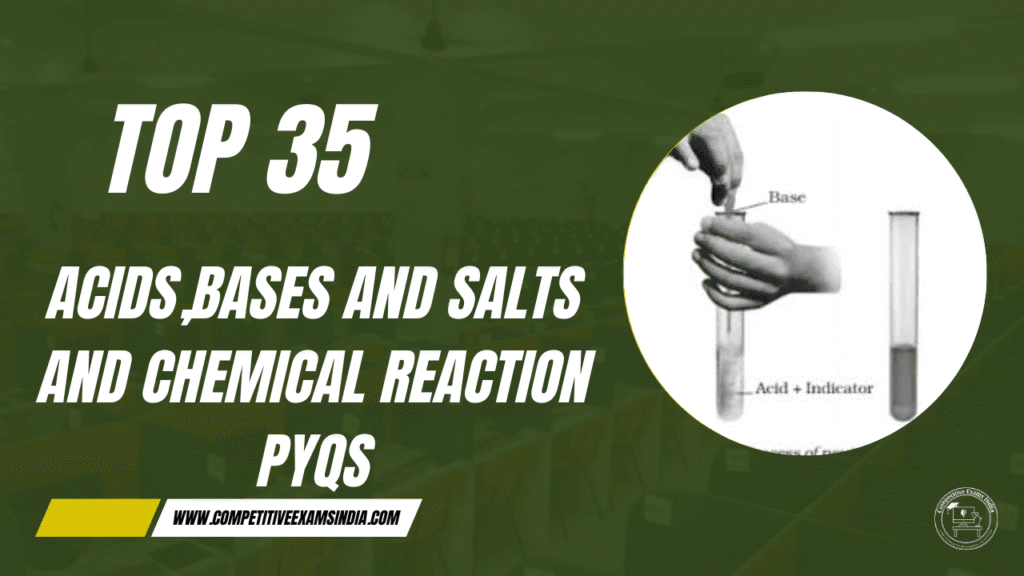
Acids Bases and Salts PYQs: Acids, Bases and Salts, along with Chemical Reactions, form the backbone of basic chemistry and are among the most frequently asked topics in competitive examinations like NDA,CDS,SSC,UPSC,and State PSCs.These concepts help us understand the nature of substances,their reactions,and their applications in daily life—from digestion and food preservation to industrial processes and environmental chemistry. A clear understanding of acids, bases, salts,and different types of chemical reactions such as oxidation,reduction,exothermic and endothermic reactions is essential for scoring well in exams and building strong scientific fundamentals.
Acids, Bases and Salts PYQs
Q. Which one of the following is an organic acid?
(క్రింది వాటిలో ఏది ఆర్గానిక్ ఆమ్లం?)[NDA 2019]
(a) Hydrochloric acid (హైడ్రోక్లోరిక్ ఆమ్లం)
(b) Nitric acid (నైట్రిక్ ఆమ్లం)
(c) Acetic acid (ఆసిటిక్ ఆమ్లం)
(d) Sulphuric acid (సల్ఫ్యూరిక్ ఆమ్లం)
Q. Which is not a Lewis acid?
(క్రింది వాటిలో ఏది లూయిస్ ఆమ్లం కాదు?)[JPSC (Pre) 2013]
(a) AICI3
(b) BF
(c) NH3
(d) FeCl3
ALSO READ : Units and Measurement PYQs in Telugu and English | Physics MCQs Online Quiz
Q.Sodawater obtained by passing carbon dioxide in water is
(నీటిలో కార్బన్ డయాక్సైడ్ను ప్రవహింపజేసి పొందిన సోడా వాటర్)
(a) an oxidising agent (ఆక్సీకరణ కారకం)
(b) basic in nature (క్షార స్వభావం గలది)
(c) acidic in nature (ఆమ్ల స్వభావం గలది)
(d) a reducing agent (తగ్గింపు కారకం)
Q.Which one of the following does not contain COOH group?
(క్రింది వాటిలో ఏదిలో COOH (కార్బాక్సిల్) సమూహం ఉండదు?)[Astt. Comm. 2019]
(a) Citric acid (సిట్రిక్ ఆమ్లం)
(b) Lactic acid (లాక్టిక్ ఆమ్లం)
(c) Tartaric acid (టార్టారిక్ ఆమ్లం)
(d) Ascorbic acid (ఆస్కార్బిక్ ఆమ్లం)
Q. Carboxylic acid group can be detected by
(కార్బాక్సిలిక్ ఆమ్ల సమూహాన్ని గుర్తించేందుకు ఉపయోగించే పరీక్ష)
(a) sodium bisulphite test (సోడియం బైసల్ఫైట్ పరీక్ష)
(b) Fehling’s solution test (ఫీలింగ్ ద్రావణ పరీక్ష)
(c) Tollen’s reagent (టోలెన్ రీజెంట్ పరీక్ష)
(d) NaHCO₃ (NaHCO₃ పరీక్ష)
Q.Which one of the following will not produce carbon dioxide on reacting with an aqueous solution of hydrochloric acid?
(క్రింది వాటిలో ఏది జలీయ హైడ్రోక్లోరిక్ ఆమ్లంతో ప్రతిచర్య చేయగానే కార్బన్ డయాక్సైడ్ విడుదల చేయదు?)[NDA 2019]
(a) Limestone (లైమ్స్టోన్)
(b) Quicklime (క్విక్లైమ్)
(c) Chalk (చాక్)
(d) Marble (మార్బుల్)
Also Read: Chapterwise GK Quizzes
Q. Which one of the following was the first mineral acid discovered?
(క్రింది వాటిలో మొదటిగా కనుగొనబడిన ఖనిజ ఆమ్లం ఏది?)[NDA 2020]
(a) Sulphuric acid (సల్ఫ్యూరిక్ ఆమ్లం)
(b) Hydrochloric acid (హైడ్రోక్లోరిక్ ఆమ్లం)
(c) Nitric acid (నైట్రిక్ ఆమ్లం)
(d) Phosphoric acid (ఫాస్ఫారిక్ ఆమ్లం)
Q. Buildup of which acid in our muscles during sudden activity causes cramps?
(అకస్మాత్తుగా ఎక్కువ శారీరక చర్య చేసినప్పుడు మన కండరాలలో కూడబెట్టబడే ఏ ఆమ్లం వల్ల కండరాల నొప్పి (క్రాంప్స్) వస్తుంది?)[SSC CGL (10+2) 2018]
(a) Lactic acid (లాక్టిక్ ఆమ్లం)
(b) Pyruvic acid (పైరువిక్ ఆమ్లం)
(c) Carbonic acid (కార్బానిక్ ఆమ్లం)
(d) Oxalic acid (ఆక్సాలిక్ ఆమ్లం)
Q. What is the chemical name of the deadly poison ‘cyanide’?
(ప్రాణాంతక విషం ‘సయనైడ్’ కు రసాయన పేరు ఏమిటి?)[SSC CGL 2019]
(a) Sulphuric acid (సల్ఫ్యూరిక్ ఆమ్లం)
(b) Hydrochloric acid (హైడ్రోక్లోరిక్ ఆమ్లం)
(c) Nitric acid (నైట్రిక్ ఆమ్లం)
(d) Prussic acid (ప్రస్సిక్ ఆమ్లం)
Q. Which among the following acid is also known as ‘Muriatic acid’?
(క్రింది ఆమ్లాలలో ‘మ్యూరియాటిక్ ఆమ్లం’ అని కూడా పిలవబడేది ఏది?)[SSC 2017]
(a) Hydrochloric acid (హైడ్రోక్లోరిక్ ఆమ్లం)
(b) Sulphuric acid (సల్ఫ్యూరిక్ ఆమ్లం)
(c) Carbonic acid (కార్బానిక్ ఆమ్లం)
(d) Nitric acid (నైట్రిక్ ఆమ్లం)
Q.‘Oil of Vitriol’ is the common name of which of the following?
(‘ఆయిల్ ఆఫ్ విట్రియోల్ (Oil of Vitriol)’ అనేది క్రింది వాటిలో ఏదికి సాధారణ పేరు?)[SSC 2017]
(a) Nitric acid (నైట్రిక్ ఆమ్లం)
(b) Carbonic acid (కార్బానిక్ ఆమ్లం)
(c) Acetic acid (ఆసిటిక్ ఆమ్లం)
(d) Sulphuric acid (సల్ఫ్యూరిక్ ఆమ్లం)
Q.Citric acid is present in free form in
(సిట్రిక్ ఆమ్లం స్వేచ్ఛా రూపంలో ఉండేది ఏదిలో?)[SSC 2014]
(a) Tamarind (చింతపండు)
(b) Milk (పాలు)
(c) Apple (ఆపిల్)
(d) Lemon (నిమ్మకాయ)
Q.Food preservatives prevent spoilage of food due to microbial growth. Which of the following acid is used as preservative of food items?
(ఆహార పదార్థాలు సూక్ష్మజీవుల పెరుగుదల వల్ల చెడిపోకుండా నిరోధించేందుకు ఉపయోగించే ఆమ్లం ఏది?)
(a) Oxalic acid (ఆక్సాలిక్ ఆమ్లం)
(b) Sulphuric acid (సల్ఫ్యూరిక్ ఆమ్లం)
(c) Carboxylic acid (కార్బాక్సిలిక్ ఆమ్లం)
(d) Benzoic acid (బెంజోయిక్ ఆమ్లం)
Q. Which acid is present in acid rain?
(ఆమ్ల వర్షంలో ఉండే ఆమ్లం ఏది?)[CGPSC (Pre) 2017]
(a) Benzoic acid (బెంజోయిక్ ఆమ్లం)
(b) Acetic acid (ఆసిటిక్ ఆమ్లం)
(c) Nitric acid (నైట్రిక్ ఆమ్లం)
(d) Oxalic acid (ఆక్సాలిక్ ఆమ్లం)
Q.The acid in gastric juice is
(గ్యాస్ట్రిక్ జ్యూస్లో ఉండే ఆమ్లం)[NDA/NA 2013]
(a) Acetic acid (ఆసిటిక్ ఆమ్లం)
(b) Nitric acid (నైట్రిక్ ఆమ్లం)
(c) Hydrochloric acid (హైడ్రోక్లోరిక్ ఆమ్లం)
(d) Sulphuric acid (సల్ఫ్యూరిక్ ఆమ్లం)
Q. Which of the following is the major component of vinegar?
(వెనిగర్లో ప్రధాన భాగం ఏది?)[SSC 2019]
(a) Citric acid (సిట్రిక్ ఆమ్లం)
(b) Lactic acid (లాక్టిక్ ఆమ్లం)
(c) Nitric acid (నైట్రిక్ ఆమ్లం)
(d) Acetic acid (ఆసిటిక్ ఆమ్లం)
Q. A base is a substance which
(క్షారం (Base) అనేది)
(a) is bitter in tests. (రుచికి చేదుగా ఉంటుంది)
(b) gives OH- ions in aqueous solution. (జల ద్రావణంలో OH⁻ అయాన్లను ఇస్తుంది)
(c) can donate electron. (ఎలక్ట్రాన్ను ఇవ్వగలదు)
(d) All of the above (పైవన్నీ సరైనవే)
Q. Antacids are
(యాంటాసిడ్లు (Antacids) అనేవి)[CGPSC (Pre) 2016]
(a) base (క్షారాలు)
(b) acid (ఆమ్లాలు)
(c) salt (లవణాలు)
(d) buffer (బఫర్లు)
Q. Which one of the following salts when dissolved in water makes the solution basic?
(క్రింది లవణాలలో ఏది నీటిలో కరిగినప్పుడు క్షార ద్రావణాన్ని ఇస్తుంది?)[NDA 2007]
(a) Sodium chloride (సోడియం క్లోరైడ్)
(b) Copper sulphate (కాపర్ సల్ఫేట్)
(c) Ferric chloride (ఫెరిక్ క్లోరైడ్)
(d) Sodium acetate (సోడియం ఆసిటేట్)
Q. On the labels of the bottles, some soft drinks are claimed to be acidity regulators. They regulate acidity using
(కొన్ని సాఫ్ట్ డ్రింక్ బాటిళ్లపై ‘ఆసిడిటీ రెగ్యులేటర్’ అని ఉంటుంది. అవి ఆసిడిటీని నియంత్రించడానికి ఉపయోగించేది)[CDS 2012]
(a) carbon dioxide (కార్బన్ డయాక్సైడ్)
(b) bicarbonate salts (బైకార్బోనేట్ లవణాలు)
(c) Both (a) and (b) ((a) మరియు (b) రెండూ)
(d) carbon dioxide and lime (కార్బన్ డయాక్సైడ్ మరియు సున్నం)
Q. Which chemical was an important symbol in our struggle for freedom?
(మన స్వాతంత్ర్య పోరాటంలో ముఖ్యమైన ప్రతీకగా నిలిచిన రసాయనం ఏది?)[CDS 2013]
(a) Glucose (గ్లూకోజ్)
(b) Fertiliser (ఎరువు0
(c) Medicine (ఔషధం)
(d) Sodium chloride (సోడియం క్లోరైడ్)
Q. Change of water into the vapour is called
(నీరు ఆవిరిగా మారడాన్ని ఏమంటారు?)[UPPSC (Pre) 1992]
(a) natural (సహజ మార్పు)
(b) physical (భౌతిక మార్పు)
(c) chemical (రసాయన మార్పు)
(d) biology (జీవ సంబంధిత మార్పు)
Q. An example of physical change
(భౌతిక మార్పుకు ఉదాహరణ ఏది?)[BPSC (Pre) 1992]
(a) blackening of silverware. (వెండి పాత్రలు నల్లబడటం)
(b) burning of candle. (కొవ్వొత్తి కాలిపోవడం)
(c) making of curd from milk. (పాలను పెరుగుగా మార్చడం)
(d) dissolving of sugar in water. (నీటిలో చక్కెర కరుగడం)
Q.Which one among the following is not a chemical change?
(క్రింది వాటిలో రసాయన మార్పు కానిది ఏది?)[NDA/NA 2013]
(a) Curdling of milk (పాలు గడ్డకట్టడం)
(b) Ripening of fruit (పండ్లు పండడం)
(c) Evaporation of water (నీటి ఆవిరీభవనం)
(d) Burning of coal (బొగ్గు కాలిపోవడం)
Q. What is the role of positive catalyst in a chemical reaction?
(రసాయన ప్రతిక్రియలో ధనాత్మక ఉత్ప్రేరకపు పాత్ర ఏమిటి?)[CDS 2013]
(a) It increases the rate of reaction. (ప్రతిక్రియ వేగాన్ని పెంచుతుంది)
(b) It decreases the rate of reaction. (ప్రతిక్రియ వేగాన్ని తగ్గిస్తుంది)
(c) It increases the yield of products.(ఉత్పత్తుల దిగుబడిని పెంచుతుంది)
(d) It provides better purity of the products. (ఉత్పత్తుల స్వచ్ఛతను మెరుగుపరుస్తుంది)
Q. Solubility of calcium oxides in water increases on lowering the temperature. Thus, dissolution process is
(ఉష్ణోగ్రత తగ్గినప్పుడు కాల్షియం ఆక్సైడ్ నీటిలో కరుగుదల పెరుగుతుంది. కాబట్టి ఈ కరుగుదల ప్రక్రియ)
(a) endothermic (ఉష్ణశోషక (ఎండోథెర్మిక్))
(b) exothermic (ఉష్ణోత్సర్గక (ఎగ్జోథెర్మిక్))
(c) non-thermic (ఉష్ణ ప్రభావం లేనిది)
(d) cannot be decided (నిర్ణయించలేము)
Q. Date of manufacture of food items fried in oil should be checked before buying because oils become rancid due to
(నూనెలో వేయించిన ఆహార పదార్థాలను కొనుగోలు చేసే ముందు తయారీ తేదీని ఎందుకు పరిశీలించాలి? ఎందుకంటే నూనెలు పాడవడం జరుగుతుంది)[CDS 2014]
(a) oxidation (ఆక్సీకరణ వల్ల)
(b) reduction (అవక్షేపణ వల్ల)
(c) hydrogenation (హైడ్రోజనేషన్ వల్ల)
(d) decrease viscosity (సాంద్రత తగ్గడం వల్ల)
Q. The conversion of sugar (C₁₂H₂₂O₁₁) → CO₂ is
(చక్కెర (C₁₂H₂₂O₁₁) → CO₂ గా మారడం ఏ ప్రక్రియ?)
(a) oxidation (ఆక్సీకరణ)
(b) reduction (అవక్షేపణ)
(c) Both (a) and (b) ((a) మరియు (b) రెండూ)
(d) None of the above (పైవాటిలో ఏదీ కాదు)
Q. In a reaction, what is the loss of hydrogen by substance called as?
(ఒక ప్రతిక్రియలో పదార్థం హైడ్రోజన్ను కోల్పోతే దాన్ని ఏమంటారు?)[SSC 2018]
(a) Reduction (అవక్షేపణ)
(b) Oxidation (ఆక్సీకరణ)
(c) Hydronisation (హైడ్రోనైజేషన్)
(d) Both reduction and hydronisation (అవక్షేపణ మరియు హైడ్రోనైజేషన్ రెండూ)
Q. Bleaching action of chlorine is due to which reaction?
(క్లోరిన్ యొక్క బ్లీచింగ్ చర్య ఏ ప్రతిక్రియ వల్ల జరుగుతుంది?)[SSC 2017]
(a) Oxidation (ఆక్సీకరణ)
(b) Hydrolysis (జలవిచ్ఛేదనం (హైడ్రోలిసిస్))
(c) Redox (రెడాక్స్ ప్రతిక్రియ)
(d) Decomposition (విఘటన)
Q. Starch iodide paper is used to test for the presence of
(స్టార్చ్–ఐయోడైడ్ పేపర్ను ఏ పదార్థం ఉనికిని పరీక్షించడానికి ఉపయోగిస్తారు?)
(a) iodine (ఐయోడిన్)
(b) iodide iron (ఐయోడైడ్ అయాన్)
(c) oxidising agent (ఆక్సీకరణ కారకం)
(d) reducing agent (అవక్షేపణ (రిడ్యూసింగ్) కారకం)
Q. Which one of the following reducing agents can also act as an oxidising agent?
(క్రింది వాటిలో ఏ అవక్షేపణ కారకం (Reducing agent) ఆక్సీకరణ కారకంగా కూడా పనిచేయగలదు?)[CDS 2010]
(a) H₂
(b) HS
(c) SO₂
(d) Hi
Q.Which one of the following compounds does not exhibt a different oxidation number of the same element?
(క్రింది సంయోగాల్లో ఏది అదే మూలకం యొక్క భిన్న ఆక్సీకరణ స్థితులను చూపదు?)[NDA 2019]
(a) Pb₃O₄
(b) Fe₃O₄
(c) Fe₂O₃
(d) Mn₃O₄
Q.The oxidation number of nickel in K4[Ni(CN)4] is
(K₄[Ni(CN)₄] లో నికెల్ (Nickel) యొక్క ఆక్సీకరణ సంఖ్య ఎంత?)[SSC 2018]
(a) zero
(b) +4
(c) -4
(d) +8
Q.Process of gaining electrons is known as
(ఎలక్ట్రాన్లను పొందే ప్రక్రియను ఏమంటారు?)[SSC CGL 2017)
(a) oxidation (ఆక్సీకరణ)
(b) reduction (అవక్షేపణ)
(c) radiation (వికిరణం)
(d) both oxidaion and reduction (ఆక్సీకరణ మరియు అవక్షేపణ రెండూ)
Q. When a substance loses oxygen during a reaction, it is called ….
(ఒక పదార్థం ప్రతిక్రియలో ఆక్సిజన్ను కోల్పోతే దాన్ని ఏమంటారు?)(SSC 2018)
(a) corrosion (తుప్పు పడటం)
(b) reduction (అవక్షేపణ)
(c) oxidation (ఆక్సీకరణ)
(d) Both corrosion and oxidation (తుప్పు పడటం మరియు ఆక్సీకరణ రెండూ)
Q. Which of the following reactions represent(s) redox process?
(క్రింది వాటిలో ఏ ప్రతిక్రియ(లు) రెడాక్స్ (ఆక్సీకరణ–అవక్షేపణ) ప్రక్రియకు ఉదాహరణ?)
(a) Electrochemical process for extraction of highly reactive metals and non- metals.
(అధిక క్రియాశీల లోహాలు మరియు అలోహాలను వెలికితీయడానికి ఉపయోగించే విద్యుత్–రసాయన ప్రక్రియ)
(b) Manufacturing of caustic soda.
(కాస్టిక్ సోడా తయారీ)
(c) Corrosion of metals.
(లోహాల తుప్పు పడటం)
(d) All of the above
(పైవన్నీ)
Acids,Bases and Salts and Chemical Reactions are not just theoretical concepts but are deeply connected to everyday life and natural processes.Mastery of these topics enables students to easily identify reaction types, understand chemical behavior,and solve objective questions with confidence in competitive exams.Regular practice of previous year questions (PYQs) and revision of key concepts, definitions,and examples will greatly enhance accuracy and speed,making these chapters highly scoring areas in chemistry.